
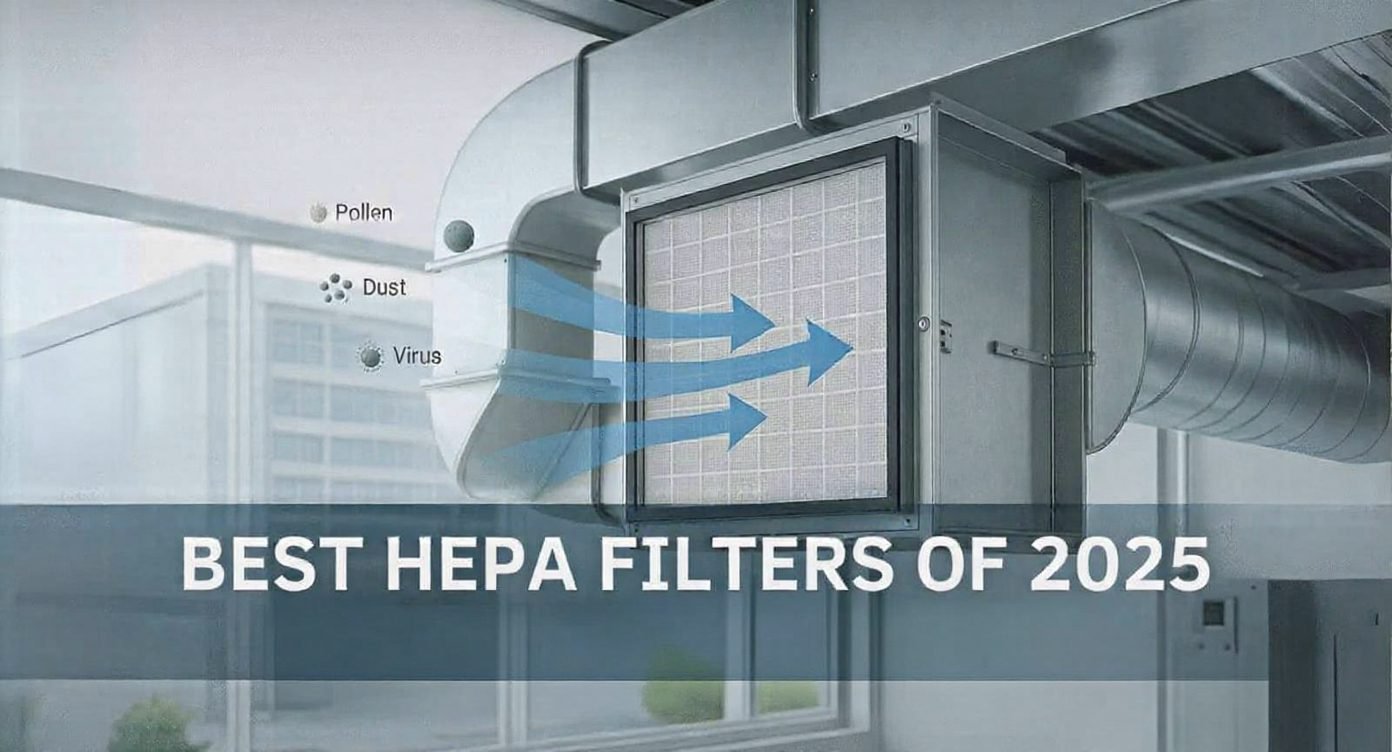
HEPA Filters: The Complete Guide to Efficiency, Types & Selection

What Is a HEPA Filter?
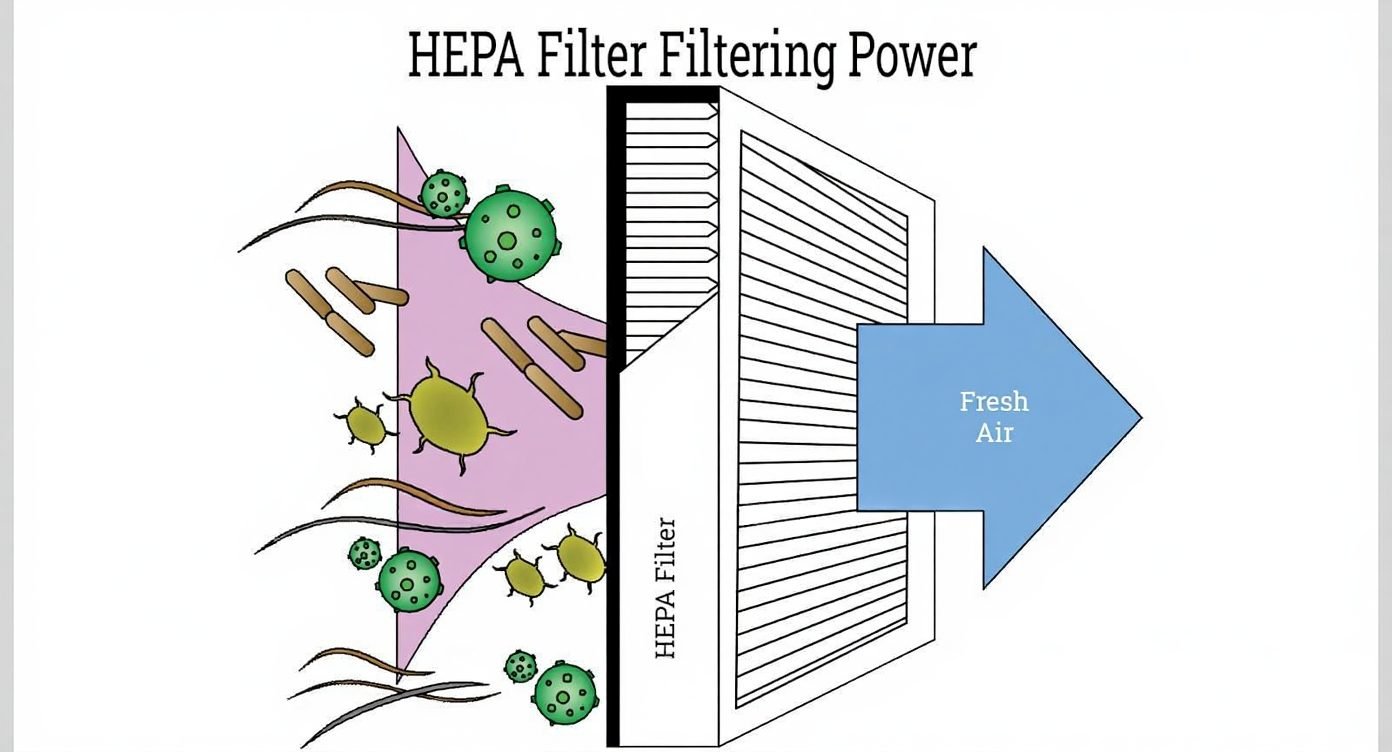
A HEPA (High-Efficiency Particulate Air) filter is an air filter that removes at least 99.97% of airborne particles 0.3 microns (µm) in size — the most penetrating particle size (MPPS). HEPA filters are the backbone of cleanroom air filtration in pharmaceuticals, electronics, hospitals and precision manufacturing, where even a single airborne particle can ruin a batch or a sterile environment.
At Onecleans, we manufacture HEPA filters in-house at our Foshan and Shenzhen facilities, backed by a CNAS-accredited laboratory and a production capacity of 60 million filters per year. Every filter is factory-tested and shipped with a full efficiency certificate.
HEPA Efficiency Grades: H13 vs H14
HEPA filters are classified under the European EN 1822 standard by their collection efficiency at MPPS:
| Grade | Efficiency @ MPPS | Typical Use |
|---|---|---|
| H13 | ≥ 99.95% | Cleanrooms, hospitals, food processing |
| H14 | ≥ 99.995% | Pharma, semiconductor, biosafety labs |
Choosing between H13 and H14 usually comes down to the cleanroom’s ISO class and the sensitivity of the process. H14 provides roughly ten times lower particle penetration than H13, which matters in ISO 5 (Class 100) and cleaner environments.
Common HEPA Filter Configurations
Box Type HEPA Filters
Box (or panel) type HEPA filters are rigid, self-supporting filters with a metal casing, widely used in HVAC terminal housings and terminal diffusers. Our H13 Box Type HEPA Filter is made to custom sizes, with mini-pleat media for low resistance and long life.
Aluminium Frame HEPA Filters
Aluminium frames are lightweight, corrosion-resistant and easy to seal, making them the default choice for most cleanroom ceiling grids. The H14 HEPA Filter with Aluminium Frame is our high-efficiency workhorse for pharma and electronics cleanrooms.
Replacement HEPA Filters
For existing systems, we supply drop-in 99.97% replacement HEPA filters matched to your housing dimensions, so you can swap filters without changing the frame.
Where HEPA Filters Are Used
- Pharmaceutical cleanrooms — sterile drug production and aseptic filling
- Electronics & semiconductor — wafer and microchip fabrication
- Hospitals & operating rooms — surgical and isolation suites
- Food & beverage — controlled processing and packaging
How to Choose the Right HEPA Filter
- Determine your target ISO class — this sets the minimum efficiency grade (H13 or H14).
- Confirm dimensions and frame type — measure the housing and choose aluminium, box or gel-seal style.
- Check airflow and pressure drop — match the filter’s rated airflow to your AHU or FFU.
- Review media and separator type — mini-pleat for high flow, separators for high temperature.
Not sure where to start? Use our step-by-step selection guide or send us your specs for a recommendation.
Related Reading
- HEPA vs ULPA Filters: What’s the Difference and How to Choose
- How Often Should You Replace HEPA Filters in a Cleanroom?
- ULPA Filters: The Complete Guide
- Air Prefilters: The Complete Guide
Frequently Asked Questions
What is the difference between H13 and H14?
H13 captures ≥99.95% of MPPS particles; H14 captures ≥99.995%. H14 is roughly ten times more efficient and is preferred for ISO 5 and cleaner environments.
How long does a HEPA filter last?
Typically 1–3 years in cleanrooms, depending on particle load, airflow and prefilter maintenance. Read our replacement guide for signs it is time to change.
Can you make custom HEPA filter sizes?
Yes. We manufacture to your exact dimensions and offer OEM/ODM. Send your drawings for a factory-direct quote.
Request a HEPA filter quote — factory-direct pricing with a response within 24 hours.