
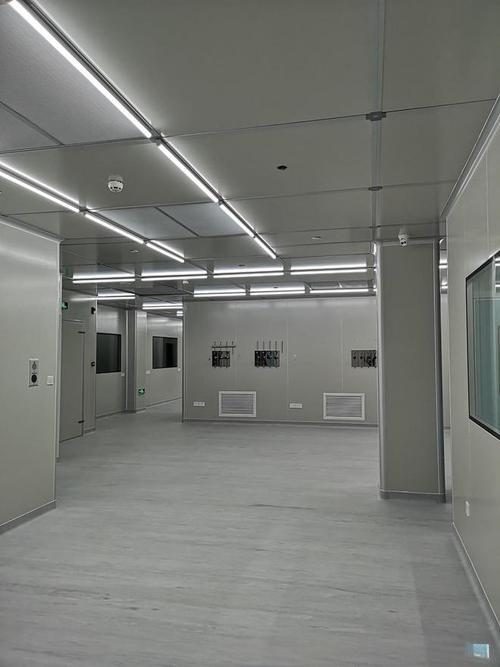
ULPA Filters: U15–U17 Efficiency Guide for Critical Cleanrooms

What Is a ULPA Filter?
A ULPA (Ultra-Low Particulate Air) filter captures at least 99.9995% of particles at the most penetrating particle size — a full order of magnitude more efficient than HEPA. ULPA filters are used where absolute cleanliness is non-negotiable: advanced semiconductor fabs, pharmaceutical aseptic zones, biosafety laboratories and precision optics manufacturing.
Onecleans manufactures ULPA filters to the U15, U16 and U17 grades of EN 1822, each individually scanned and certified at our CNAS-accredited laboratory before shipping.
ULPA Efficiency Grades: U15, U16 and U17
| Grade | Efficiency @ MPPS | Typical Use |
|---|---|---|
| U15 | ≥ 99.9995% | ISO 4–5 cleanrooms, pharma aseptic filling |
| U16 | ≥ 99.99995% | Semiconductor, advanced R&D labs |
| U17 | ≥ 99.999995% | Ultra-critical microelectronics, optics |
Our ULPA Filter U15/U16/U17 covers the full range, letting you specify the exact grade your process requires.
ULPA vs HEPA: When Do You Need ULPA?
HEPA (H13/H14) is sufficient for most cleanrooms. You should move up to ULPA when particle counts below 0.1–0.3 µm matter, such as in semiconductor photolithography, nanomaterial handling or aseptic bioprocessing. For a deeper comparison, see our HEPA vs ULPA guide.
Keep in mind ULPA filters have higher resistance than HEPA at the same airflow, so fan sizing and energy use should be evaluated during design.
ULPA Filter Construction
High-grade ULPA filters use ultra-fine microglass or PTFE media in a mini-pleat pack, sealed into a robust frame with polyurethane or gel. Construction details that matter:
- Mini-pleat media — more media area, lower pressure drop, longer life
- Frame material — aluminium, stainless steel or plastic, matched to the cleanroom
- Sealing — polyurethane potting or gel seal for leak-free installation
- Individual testing — every ULPA filter should ship with a scan test certificate
Applications
- Semiconductor fabs — photolithography and wafer handling
- Pharmaceutical aseptic zones — sterile filling lines
- Biosafety laboratories — BSL-3/BSL-4 containment
How to Specify a ULPA Filter
- Confirm required grade (U15/U16/U17) against your ISO class and particle limits.
- Match airflow and pressure drop to your fan or FFU capacity.
- Choose frame and seal type for your housing and cleanroom classification.
- Request a scan test certificate to verify each filter’s performance.
Related Reading
Frequently Asked Questions
What does U15, U16 and U17 mean?
They are EN 1822 efficiency grades for ultra-low penetration air filters: U15 ≥99.9995%, U16 ≥99.99995%, U17 ≥99.999995% at MPPS.
Do ULPA filters cost more than HEPA?
Yes — ULPA media is finer and every filter is individually scan-tested, which increases cost. The upgrade is justified only where particle control below HEPA limits is required.
Can ULPA filters be custom-sized?
Absolutely. We manufacture to your dimensions with OEM/ODM support.
Request a ULPA filter quote — specify your grade and dimensions for factory-direct pricing.