
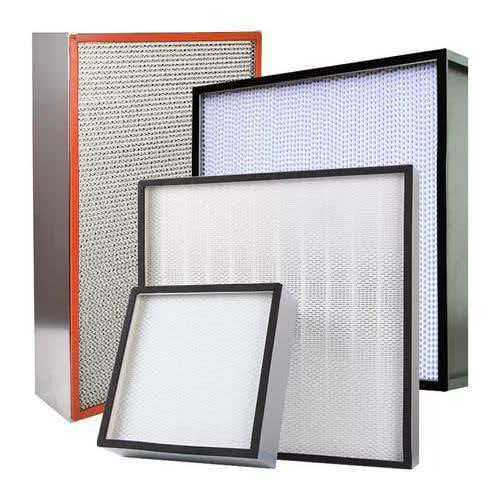
Q&A: Why Do H14 HEPA Filters Have 3 Different Penetration Values? Which Is The Golden Standard?

Q: We have seen three different penetration numbers for H14 HEPA filters: 0.005%, 0.01% and 0.05%. Which one is the golden standard?
This is one of the most common questions we receive from cleanroom engineers, HVAC contractors and pharmaceutical project managers.
The short answer: there is no single universal golden standard. Each number applies to a different testing stage and follows a different international standard.
| Penetration | Standard | What it means |
|---|---|---|
| ≤ 0.005% | EN 1822 | Factory test — filter media performance (H14) |
| 0.01% | ISO 14644-3 | On-site integrity/leak test alarm limit (H14) |
| 0.05% | — | On-site leak alarm threshold for H13 (not H14) |
What does 0.005% stand for?
0.005% is the factory performance requirement under EN 1822.
EN 1822 is the standard for filter factory testing. When a standalone brand-new H14 HEPA filter is tested in ideal laboratory conditions, its maximum local penetration must be ≤ 0.005%.
This value describes the inherent performance of the filter media itself.
Then what about 0.01%?
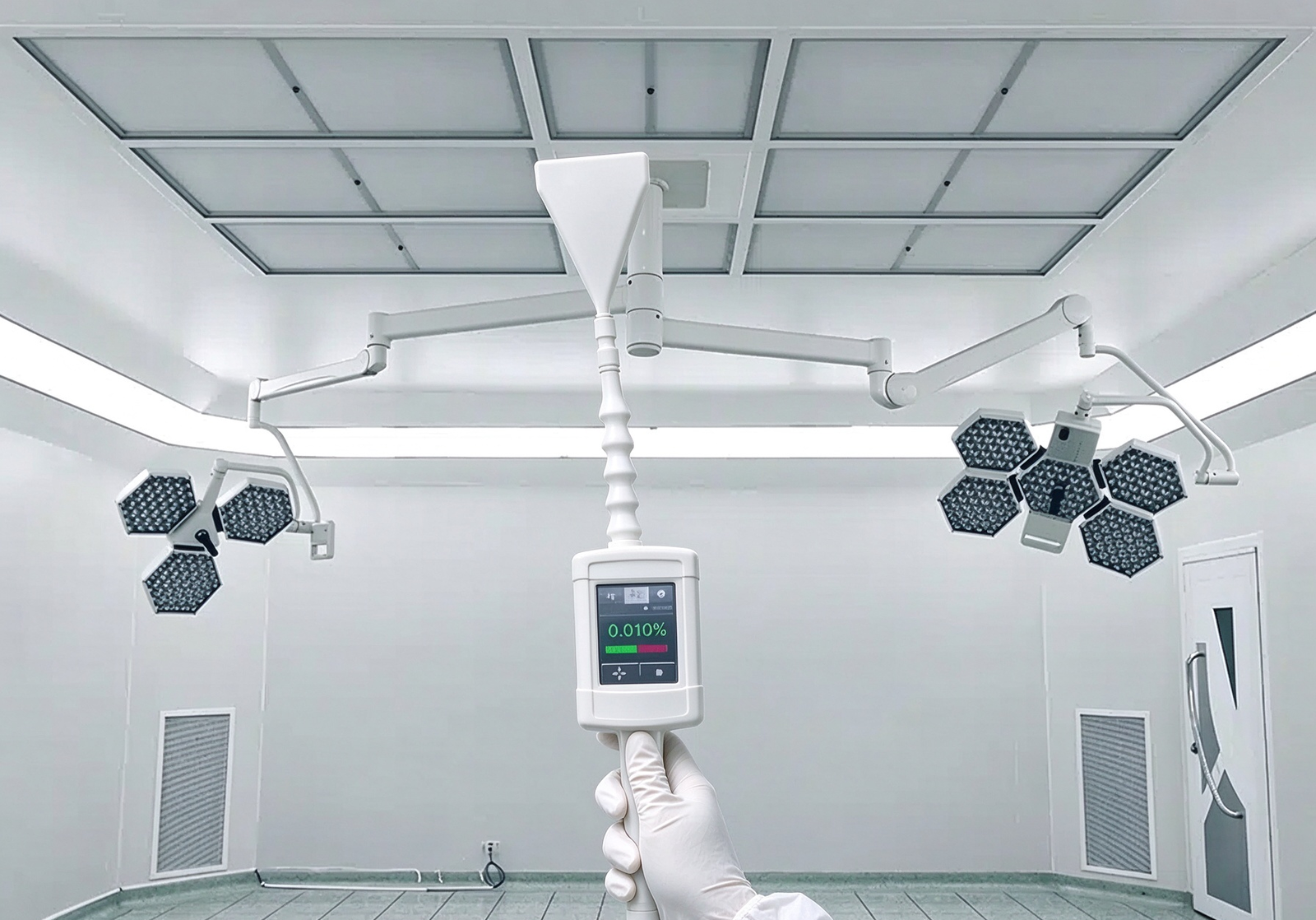
0.01% is the widely accepted alarm threshold for on-site integrity tests, governed by ISO 14644‑3.
After the H14 filter is mounted on the cleanroom ceiling, technicians perform leak scanning as shown in the image below. This test checks the whole assembly — filter media, frame, gasket and installation joints — not only the filter material.
The global cleanroom industry commonly sets 0.01% as the alarm limit for installed H14 filters.
What is 0.05% used for?
0.05% is NOT a standard for H14 filters. It is the typical on-site leak alarm threshold for H13 HEPA filters.
Many people mix up H13 and H14 parameters, which leads to confusion over these penetration values.
How does this relate to ISO 14644 cleanroom classification?
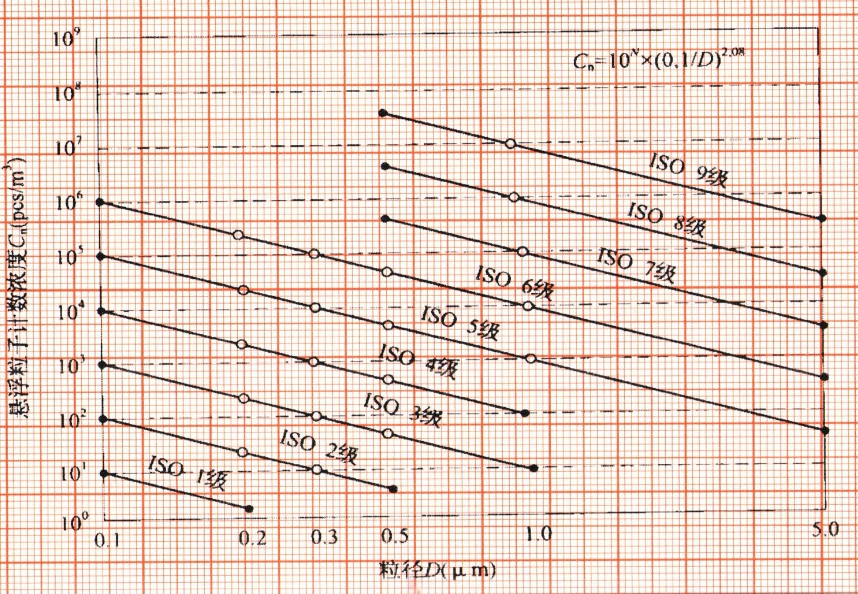
ISO 14644-1 defines the allowed particle concentration for each cleanroom class. The chart below shows the particle limits for ISO 1 through ISO 9 cleanrooms.
High grade cleanrooms such as ISO 5 and ISO 6 rely on H14 HEPA filters to maintain these low particle levels. A filter that passes factory EN 1822 testing and on-site ISO 14644-3 leak inspection is critical to hit your target cleanroom classification.
Can your H14 HEPA filters meet both standards?
Yes. Our H14 HEPA filters are manufactured to comply with EN 1822, with local penetration ≤ 0.005%, and can pass on-site integrity tests following ISO 14644‑3 with a 0.01% alarm setting.
Our H14 filters serve pharmaceutical cleanrooms, laboratories, microelectronics facilities and high-end HVAC projects. CAD drawings and technical datasheets are available upon request.
Where can I get more technical data?
Feel free to contact our team if you have further technical questions or project requirements. We can provide official datasheets, CAD drawings and quotations for your cleanroom project.